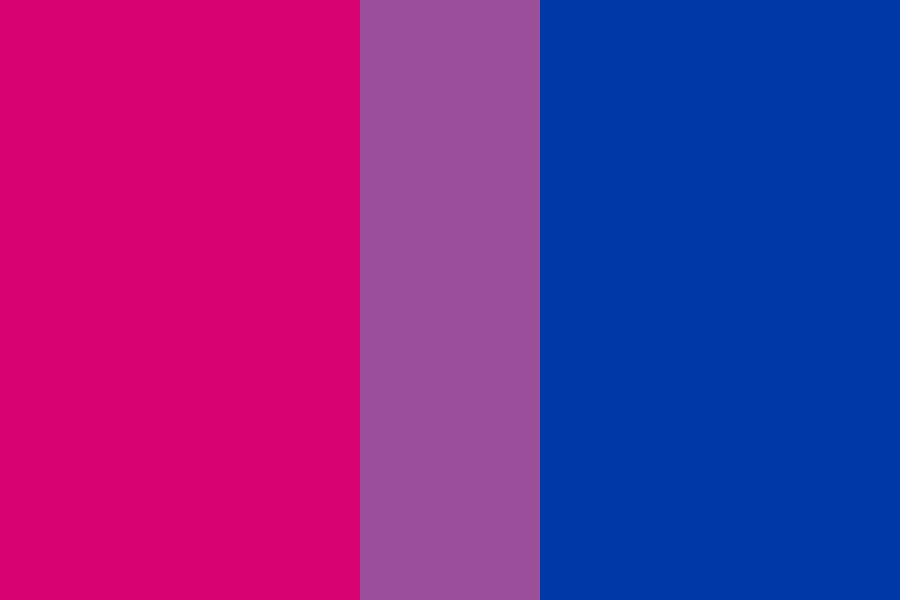
Two fifths pink, one fifth purple, and two fifths blue Purple (the overlap between pink and blue) represents sexual attraction to two or more genders. The bisexual flag, also called the bisexual pride flag, is a pride flag representing bisexuality, bisexual individuals and the bisexual community.
Pink, purple and blue, the three colors in the bisexual flag, stand for sexual attraction to the same sex only (gay and lesbian), sexual attraction to both sexes (bi) and sexual attraction to the opposite sex only (straight), respectively. Blue represents sexual attraction to the opposite gender The rgb and cmyk values of the colors are in the table below along with the closest ral and pantone® numbers
As stated above, the bisexual flag has three colors They’re situated in three horizontal sections, with the top pink section being the biggest, the purple section in the. The bisexual flag was created in 1998 by activist michael page The flag has three colors
The flag is internationally recognized as the official symbol of bisexuality Lavender is intentionally placed in the middle to symbolize the blending of attraction to multiple genders. If you were wondering what the exact shades of colors being represented in the bisexual pride flag were You will be interested to know that the pink shade is actually supposed to be magenta, accompanied by standard purple, and followed by royal blue.

A detailed breakdown of the bi flag’s color symbolism to further clarify, here’s a table detailing the symbolism behind each color of the bisexual pride flag It is important to understand the nuances of each color and how they work together to express the community’s experiences.